1
Question 1 of 15
A physical equation is dimensionally homogeneous when:
This Mechanics quiz quiz contains 15 multiple choice questions designed to help you revise and test your A level Mechanics Quizzes knowledge. Select an answer for each question and click “Submit Answer” to see instant feedback. Take your time and try to score as high as possible!
In this quiz, we shall take a look at Mechanics, and a lot of exciting concepts like forces, velocity, dimensions, etc will be reviewed with the aid of the following questions. You will be guided through the journey of mastering the topic as you practice along.
Mechanics is one of the major branches of physics, and it is concerned with the motion of physical objects or bodies. To be more specific, mechanics studies the relationship between forces, motion, and matter. Forces are applied on bodies and cause them to either begin the motion, end motion, or change direction in motion. Notwithstanding, there are two branches of mechanics which are classical and quantum. Classical being concerned with the motion of bodies under the influence of a force or forces, and Quantum mechanics dealing with the explanation of the functioning of the universe at a scale smaller than atoms.
Are you looking forward to having a good pass in this section of Physics? All you need to do is take the quiz and improve on your knowledge. Good luck as you solve it!
Question 1 of 15
A physical equation is dimensionally homogeneous when:
Question 2 of 15
The method of dimensions
Question 3 of 15
A graph cannot be used to
Question 4 of 15
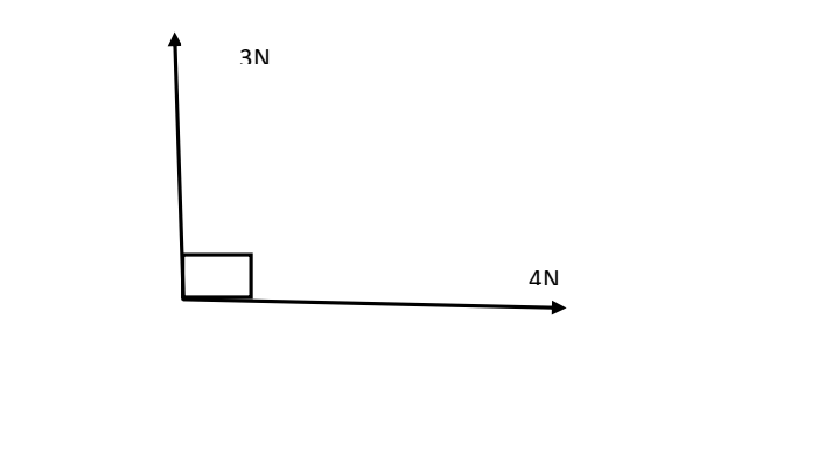
The resultant of the two forces is
Question 5 of 15
The area under a force velocity graph gives
Question 6 of 15
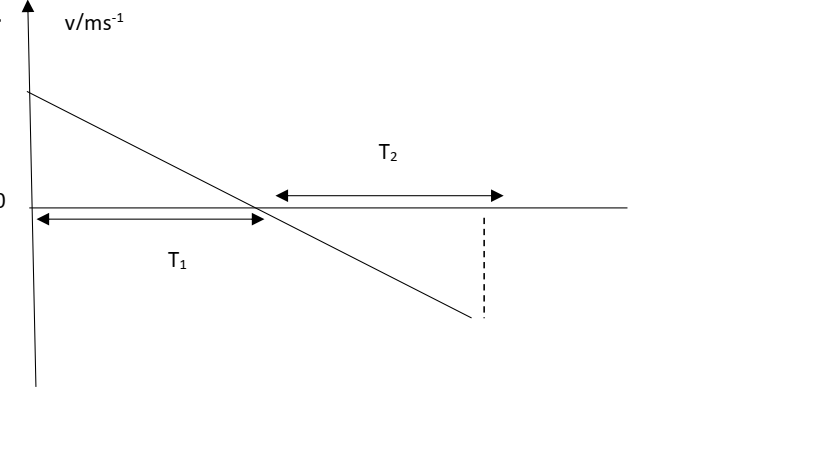
The graph presents the motion of
Question 7 of 15
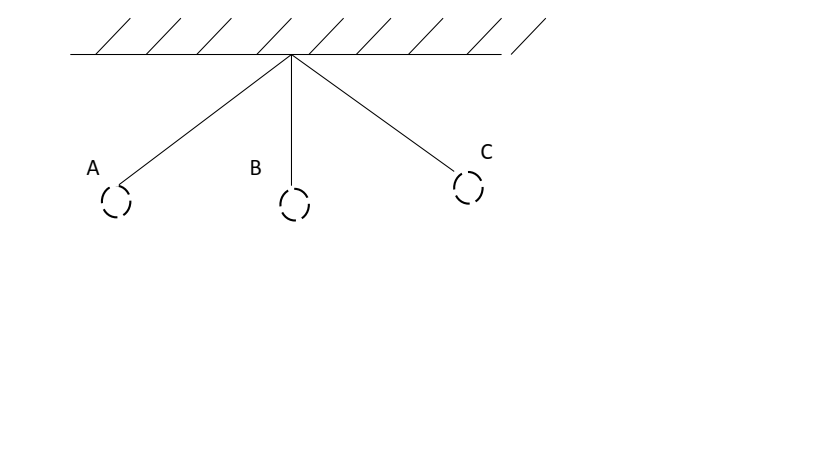
The bob of the simple pendulum is set in oscillation. If strings cuts when the bob is passing through point B
Question 8 of 15
The units Ns are the same as
Question 9 of 15
When two bodies collide elastically
Question 10 of 15
When a big body explodes into two unequal masses m1 and m2
Question 11 of 15
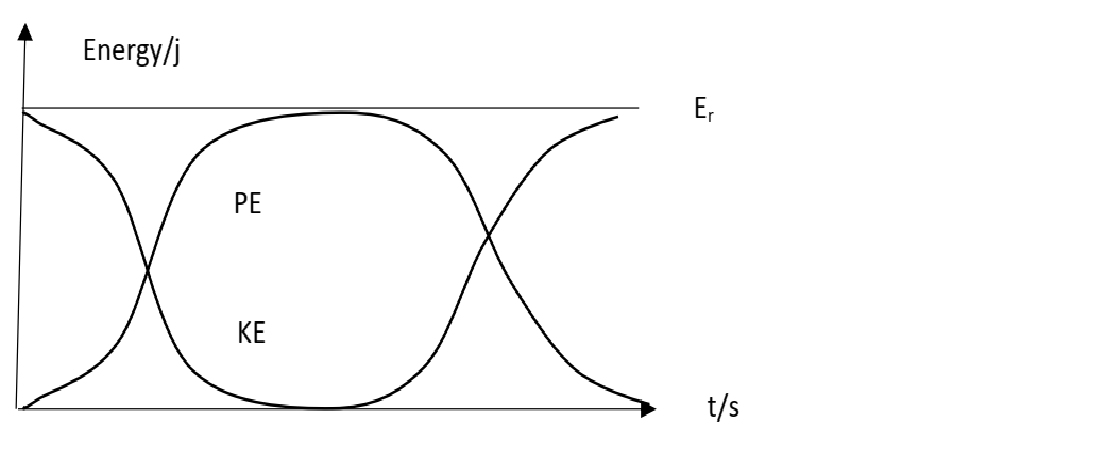
The above graph represents the variations of energy of energy with time for
Question 12 of 15
When the work done in moving round a closed path in a field to the original point is zero, the forces in
that field are called
Question 13 of 15
The forces F has a magnitude:
Question 14 of 15
A stone of mass 2kg is at the end of a string length 1m. if the stone is whirled round in a vertical circle at
4m. The Maximum tension in the string is
Question 15 of 15
When a body of mass m moves in a circular path of radius r at a speed v.