1
Question 1 of 15
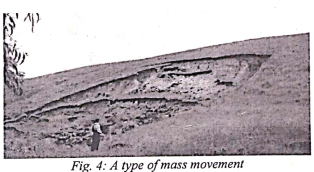
Identify the type of mass movement shown in the picture below (fig 4).
This A Level Geography Quiz 2021 Part 2 quiz contains 15 multiple choice questions designed to help you revise and test your A level Geography Quizzes knowledge. Select an answer for each question and click “Submit Answer” to see instant feedback. Take your time and try to score as high as possible!
How many times have you gone through the GCE questions? My guess is just once or twice. Answering past questions has been discovered/diagnose as the best way to prepare for an exam in any subject and geography is one those subjects
This is a great way of learning the form of the exam. Once you understand the terms, it’s easier to use theories and frameworks. In a way to help out students understand these theories, quizzes have been prepared for students/people going in for one or two different examinations.
We have created a quiz of 0 questions which are questions from Advanced level Geography 2020.
Just trying this quiz gives you the satisfaction of knowing what you encounter ahead
Good luck!!!
Question 1 of 15
Identify the type of mass movement shown in the picture below (fig 4).
Question 2 of 15
The four types of humus in the soil are:
Question 3 of 15
In Jenney’s Equation, S=f (Cl, O, R, P, T). Which of the soil forming factors do you consider the most influential?
Question 4 of 15
It is a characteristic of soil development in the Tropical rainforest region?
Question 5 of 15
In which of the following categories will you classify the volcanic soils of the Mount Cameroon area and the alluvials on the Coastal lowlands?
Question 6 of 15
Animals that feed upon mixed diet of plants and animals in an ecosystem are called:
Question 7 of 15
A degraded climax vegetation that has been maintained for long in an area due to persistent human interference is known as:
Question 8 of 15
Identify the ecosystem or biome with the least Net Primary Productivity (NPP) from the following:
Question 9 of 15
Once a lot of deforestation takes place, there is an imbalance in global oxygen and carbon dioxide leading to the accumulation of carbon dioxide in the atmosphere. This contributes most significantly to;
Question 10 of 15
Building levees and retaining walls, construction of dams, straightening meanders are some of the ways to control:
Question 11 of 15
Which of the following assertions is incorrect?
Question 12 of 15
Which of the following is an economic consequence of the second stage of the Demographic Transition Model?
Question 13 of 15
Which of the following examples would John consider as a “Push factor” as he considers moving from Maroua to Kribi by 2017?
Question 14 of 15
Study the characteristics of a country below and answer the question that follows.
-High level of unemployment
-Diminishing returns to factors of production
-High population densities
-low living standards
This country is said to be:
Question 15 of 15
A country with a population of 5 million and with 50,000 births per year has a crude birth rate of:
Geography is a science that deals with the earth and its life; especially t...
Geography is the study of places and the relationships between people and t...
Yes, every student has the opportunity of having a good grade during the GC...
Geography is defined as the study of the landforms, bodies of water, climat...